
By Sydney Cohen
Naan with Palak Paneer and rice, understand? How about, fresh oven baked bread with stewed spinach and fresh farmer’s cheese with steamed basmati rice. Sound a little more appetizing?
It might be fun to get to know foods like this. Indian cuisine is invading our televisions, grocery stores and suburban strip malls.
 |
| Palak Paneer |
Indian food is a rising trend in the U.S. Restaurants and thousands of new grocery items are profiting in the states. Mintel, a market research company, found that the fastest growing segment in supermarkets was Indian food, with sales increasing nearly 35 percent from 2006 to 2008.
A new show on Food Network called “Aarti Party” where host, Aarti Sequiera tries to fuse western and Indian foods. “I really wanted the first episode of “Aarti Party” to convey my culinary point of view, which is to take the sting and the intimidation out of Indian food,” Sequiera said in an interview on National Public Radio.
There are restaurants spanning from downtown to even the tiniest suburbs that serve authentic foods such as Tandoor Restaurant, Surabhi Indian Cuisine, Kabob’s Restaurant, Biryani Indian Cuisine, Saffron and countless others. Check the local City Pages, or urbanspoon.com.
So now’s the time to take a bite and start exploring some new foods. There is something for everyone in the thousands of dishes Indian culture has to offer.
First pick a restaurant. Establishments may vary in price so check the menus online if available, or try a lunch buffet. A buffet will give an opportunity to try various dishes at a reasonable price. If dinner is more convenient, invite some friends to dine with you, so you can try more things.
For an appetizer I suggest starting with some samosas, vegetable pastries filled with meats or vegetables. Try not to go for breads with dips, as main courses are usually served with bread.
 |
| Samosas |
Then order a main dish, do not ask for beef or pork (unless on the menu), most Indian restaurants won’t serve either because of religious beliefs. Most of the main courses are like stews, casseroles, hot-dishes, however one can relate. Menus will be separated by chicken, seafood, lamb or goat, vegetarian, and regional specialties.
A recommendation would be to order the main course Thali or a Thali platter, for a couple more bucks the dish comes with small portions of soups, jellies, sweets, or other assortments of things to try.
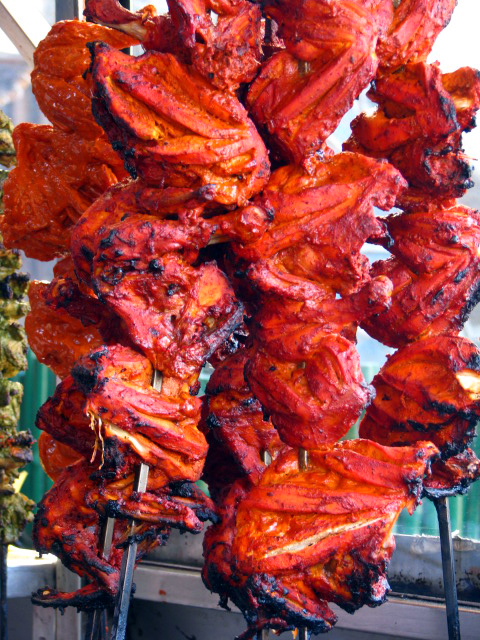 |
| Tandoori Chicken |
If no allergies or food phobias twirl a finger and stick it down on the page, chances are that’s a good dish. Read the description, if no biases proceed to place your order. Finally, when the dish is served ask what’s in it. Sure, some may be reluctant to bother someone they don’t know, but the ingredients may give some intrigue. If specific phobias are in need of attention ask the server what’s in it before ordering.
Esrita Kalra, an owner of Tandoor Restaurant in Bloomington says to try the Tandoori Chicken, it is skinless chicken with lots of spices. She says everything is fabulous because their restaurant only uses fresh ingredients never frozen, unlike most restaurants in the U.S. Shrimp Vindaloo, Malai Kofta and Chicken Curry are other good dishes.
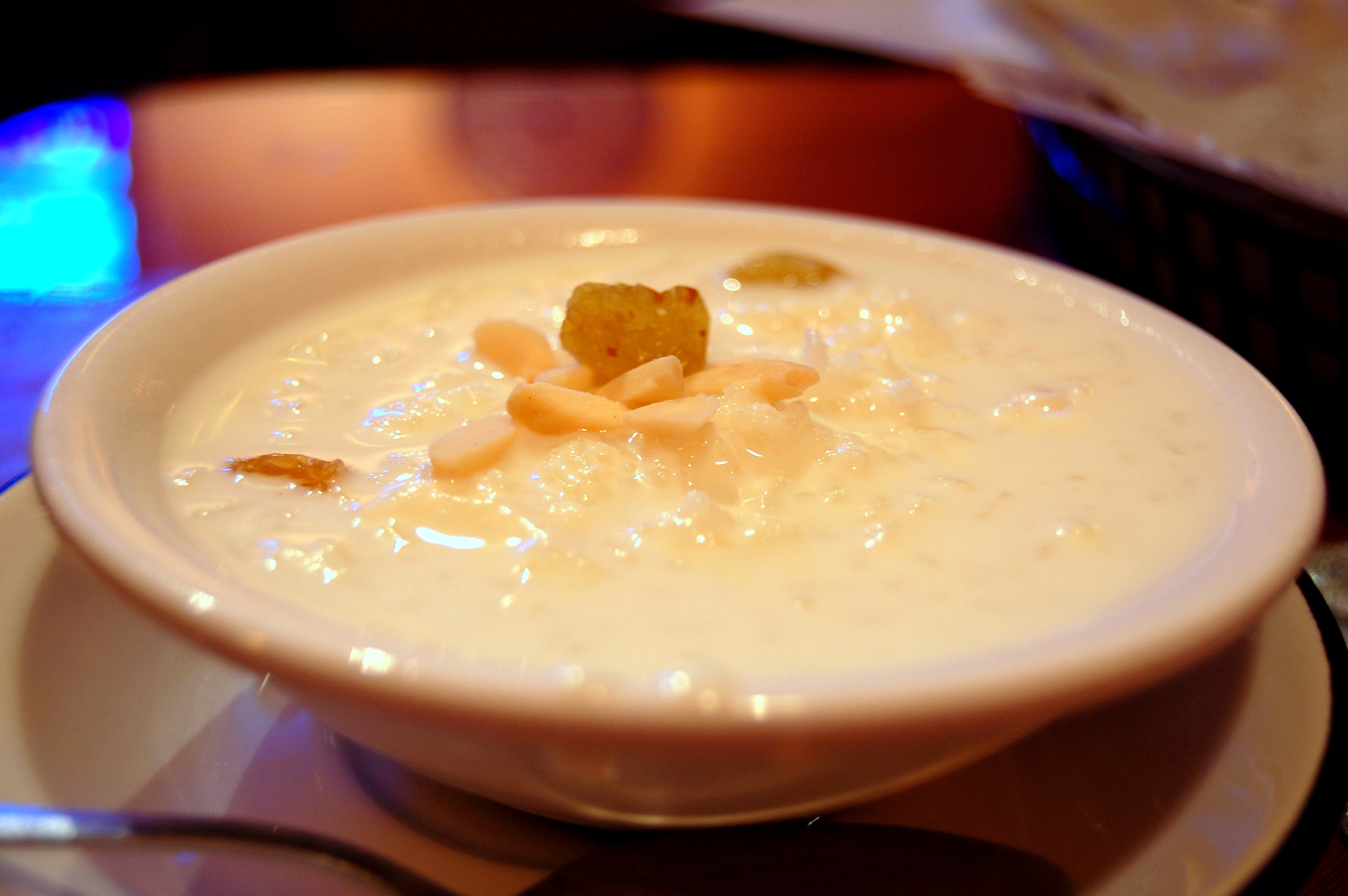 |
| Kheer (rice pudding) |
Traditionally sweets are served before, or with the meal. Many consist of regional yogurts, fruits, nuts, honey, or a pastry. Kheer, a rice pudding served with raisins and nuts, or a sweet beverage like Mango Lassi might satisfy your sweet tooth.
Many may be reluctant to enter an establishment where the customs may be unfamiliar. It is okay to eat with your hands. “We wash our hands before and after the meal. We use one hand. I love to eat with hand, I enjoy it,” Ms. Kalra says. “We eat every meal with bread and rice to scoop all the sauce.”
Unless related to people around the table it is best to keep food on your own plate, double dipping can be offensive and is considered rude and unhygienic. The concept is called “Jutha.” “Don’t touch my food, I don’t want to eat your leftovers, I don’t want to eat your Jutha.” Ms. Kalra says.
If dining with people from India, leave some food on the plate to show satiation; eating everything indicates culturally that you would like more, where in western culture it is more common to struggle to get that last bite in food-india.com states.
So, enjoy exploring new food, take time to discover new ingredients and styles with cooking.
“The food, I don’t understand, but I eat it and I love it!” Gloria Israel says, a woman who has visited an Indian restaurant only once. “It has a lot of spices!”
- All pictures from wikipedia.com
